
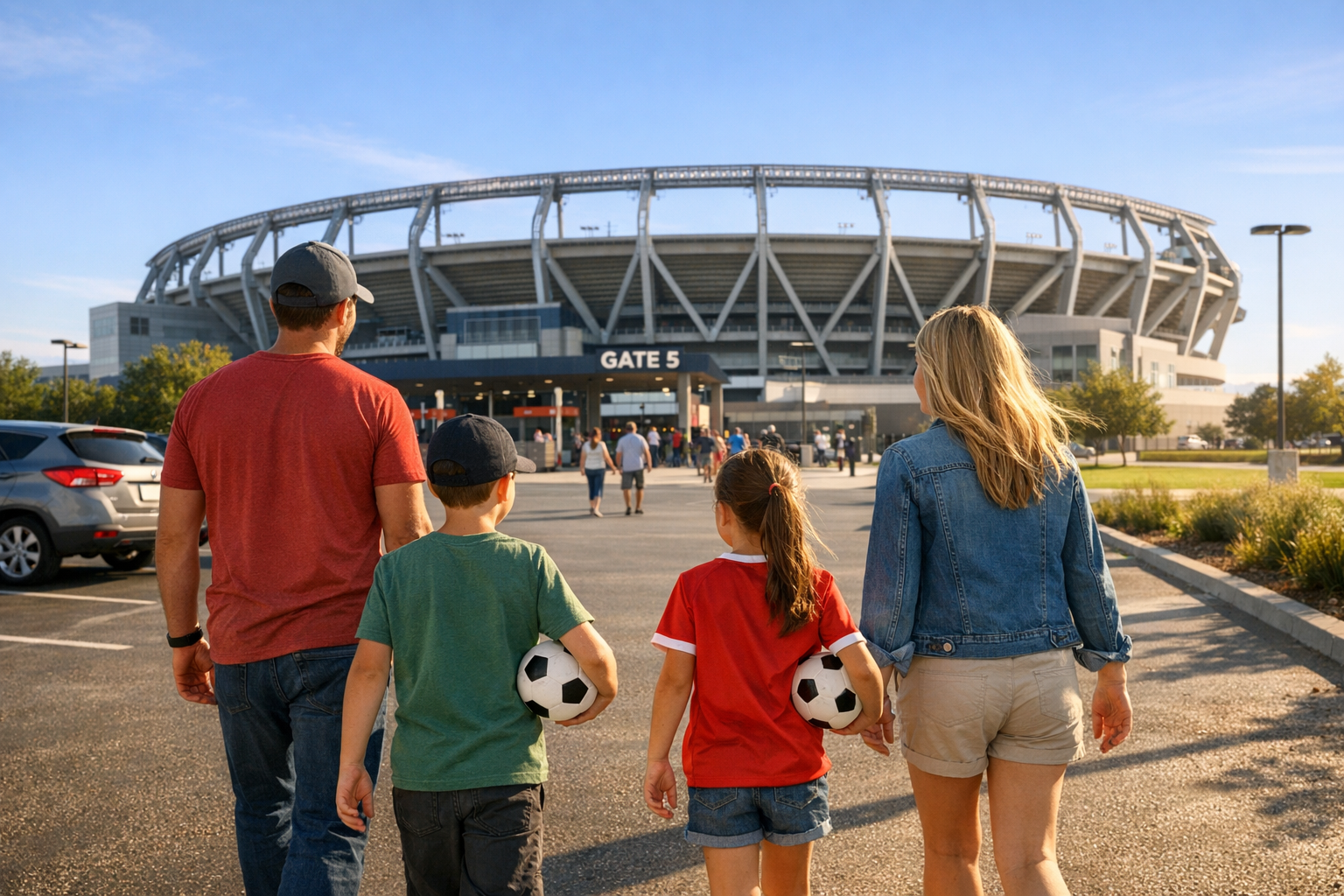
When attending a soccer match, timing your arrival is key to enjoying the game without stress. Here's the quick answer: arrive 60–90 minutes before kickoff for regular matches. For high-stakes games like playoffs or derbies, plan to get there 90–120 minutes early. This gives you enough time to navigate traffic, clear security, and enjoy pregame activities like player warm-ups or fan zones.
Key points to consider:
- Security lines peak 30–45 minutes before kickoff.
- Parking lots open 2–3 hours before the game.
- Fan zones and warm-ups start about 2 hours before kickoff.
Adjust your timing based on:
- Match type: Bigger games mean larger crowds and longer lines.
- Stadium size: Larger venues need more time for entry.
- Transportation: Driving? Arrive earlier to avoid parking delays. Using public transit? Check schedules for matchday changes.
Families with kids should arrive even earlier - at least 2 hours before kickoff - to account for restroom breaks, finding seats, and enjoying kid-friendly activities. For a smooth experience, plan ahead, check weather conditions, and load your mobile tickets before leaving home.
::: @figure
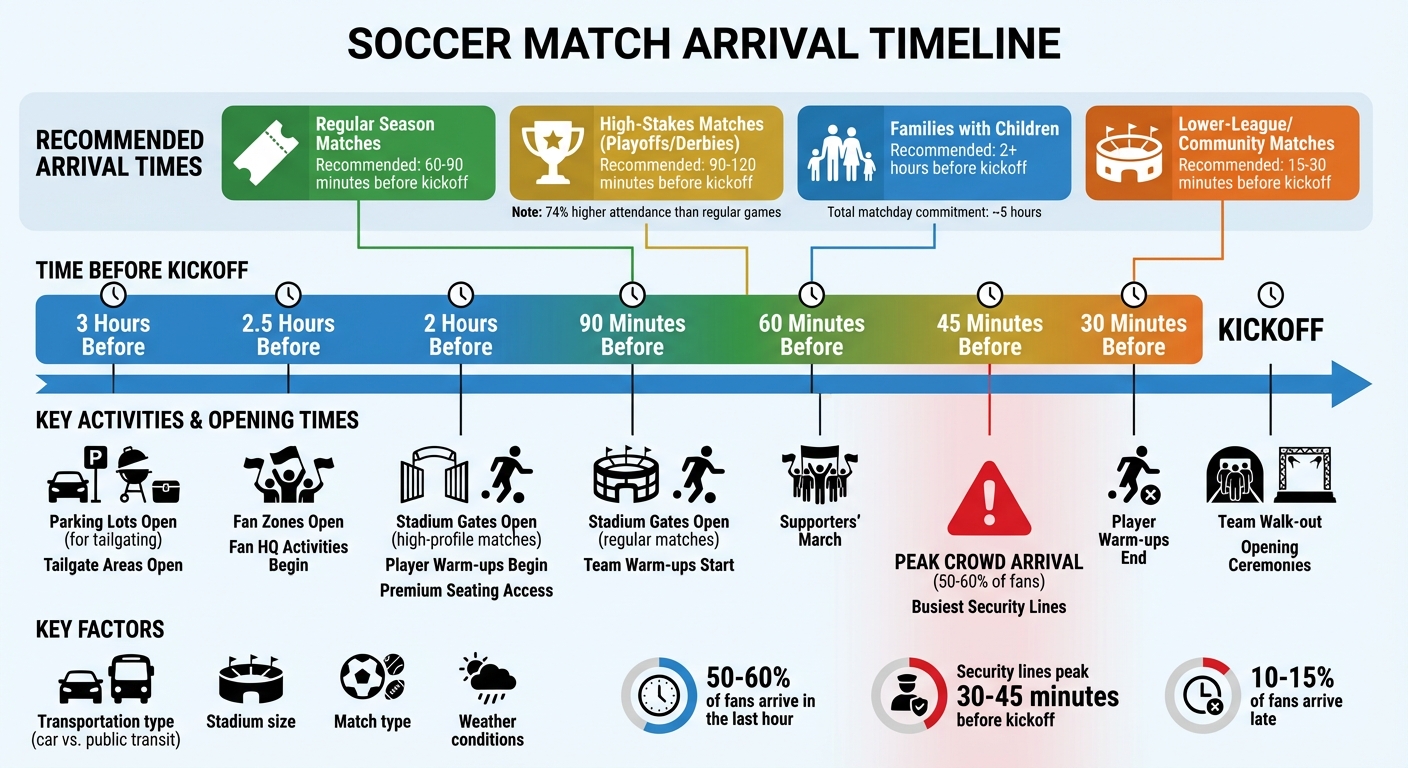
Soccer Match Arrival Timeline: When to Arrive Based on Match Type · Image: SEObot
How Early to Arrive at Soccer Matches
Standard Timing Guidelines
Planning to arrive 60–90 minutes before kickoff is a solid approach for most soccer matches. This timeframe allows you to navigate security, grab a snack or some merchandise, and find your seat without feeling rushed. Many fans tend to arrive within this window, with the majority getting to the stadium between 30 and 60 minutes before the match begins.
Keep in mind that the stadium experiences its busiest period 30–45 minutes before kickoff, as around 50–60% of attendees enter during this time. If you arrive during this peak, you might encounter longer lines at security and concession stands. Teams typically start their warmups about 90 minutes before the match and wrap up roughly 35 minutes before kickoff, with players making their way onto the field about 10 minutes before the game begins.
Interestingly, about 10–15% of fans end up arriving late due to various delays. To avoid being part of that group, aiming for a 90-minute buffer is a smart move.
But what about specific factors like the size of the stadium or the type of match? These can significantly influence your arrival time.
How Stadium Size and Match Type Affect Timing
For high-stakes matches - like playoffs, derbies, or championship games - plan to arrive even earlier, ideally 90–120 minutes before kickoff. These events often draw much larger crowds and come with tighter security measures, leading to longer wait times for entry. Attendance for high-profile matches can spike by as much as 74% compared to regular games, putting extra pressure on entry points.
On the other hand, lower-league or community matches are a different story. At smaller venues, fans tend to arrive in a tighter window, usually 15–30 minutes before kickoff. Security is usually less intensive, and the smaller crowds make entry smoother. Weekend matches often see fans arriving earlier and more spread out, while weekday evening games result in arrivals closer to kickoff, as many attendees come straight from work.
What Affects Your Arrival Time
Transportation and Parking Options
How you get to the stadium plays a big role in your timing. Parking lots at major soccer venues usually open about two hours before kickoff. For a 7:30 PM match, that means parking lots open at 5:30 PM, and stadium gates typically follow at 6:00 PM. Showing up when parking opens can help you avoid the traffic crunch that ramps up roughly an hour before the game starts.
If you're driving, factor in some extra time for bag checks, especially if you’re carrying items that might not meet stadium guidelines. Another tip: load your mobile tickets before you’re near the venue. Cellular networks often get overloaded as fans try to access their tickets simultaneously.
Weather can also throw a wrench in your plans. Inter Miami Manager Javier Mascherano highlighted this during a severe weather warning:
> "If the snow falls like they say is going to fall, we believe that the city is going to completely collapse, so people won't be able to go to the field, the accesses may be closed".
Always check the weather forecast and local traffic updates before heading out, especially if you're attending an outdoor event.
Security Checks and Entry Procedures
Getting to the stadium is only half the battle - making it through security is the next hurdle. About 50–60% of fans arrive within the last hour before kickoff, which can create long lines at entry points. For instance, LAFC advises fans to arrive at BMO Stadium two hours ahead of time to account for traffic and security protocols.
Security measures often include mobile ticket scans, walking through metal detectors, and hand-held sensor checks. While many venues have multiple gates to manage the crowds, some entrances tend to be busier than others. Make sure to check your ticket for the assigned gate - whether it’s the North Gate, Southeast Gate, or another - to avoid unnecessary detours.
Most stadiums enforce a clear bag policy (usually 12" x 12" x 6"), and backpacks are generally not allowed. Knowing these rules ahead of time can save you from delays or being turned away at the gate. Some venues also offer "Fast Track" lanes for team insiders or loyalty program members, like Marriott Bonvoy, which can help you skip the longer lines.
Pre-Match Activities and Fan Zones
Arriving early doesn’t just save you stress - it also unlocks extra matchday perks. Fan zones and plazas usually open 2 to 2.5 hours before kickoff, featuring interactive games, sponsor activities, and sometimes opportunities to meet team legends. If you’re hoping to snag limited-edition giveaways, like matchday pins or memorabilia, getting there early increases your chances, as these are often distributed on a first-come, first-served basis.
Player warm-ups start 45 to 90 minutes before kickoff and end about 35 minutes before the match. This is your chance to watch the team’s tactical drills up close. If you’d rather shop for merchandise without battling long lines, aim to arrive at least an hour before the game. Tailgaters should note that parking lots often open three hours ahead of kickoff, offering plenty of time to set up and enjoy pre-game festivities.
| Activity | Typical Start Time (Before Kickoff) |
|---|---|
| Parking Lots Open | 2–3 Hours |
| Fan Zones / Fan HQ | 2–2.5 Hours |
| Gates Open | 90–120 Minutes |
| Player Warm-ups | 45–90 Minutes |
| Team Walk-out / Ceremonies | 10–15 Minutes |
Regular Season [MLS](https://www.mlssoccer.com/) Matches
MLS · Image: SEObot
When it comes to regular season MLS games, timing your arrival can make or break your matchday experience. If you’re aiming for the basics - getting in, finding your seat, and catching kickoff - arriving about 90 minutes before the game starts should do the trick. Most stadiums, including big names like Mercedes-Benz Stadium, TQL Stadium, and Lower.com Field, open their gates at this time, giving you enough leeway to get through security and settle in.
For those looking to soak in the full matchday vibe, plan to get there 2 to 3 hours early. Parking lots and tailgate areas usually open 3 to 4 hours before kickoff, while fan zones and plazas kick off their pre-match entertainment about 2 hours ahead. A highlight for many fans is the Supporters' March, a spirited tradition that typically happens 60 to 75 minutes before the game. Showing up when the gates open also means you'll have time to grab promotional goodies like rally towels, which are often limited to the first 10,000 fans at venues like Lumen Field. Plus, you can catch the players warming up and see the Starting XI announcement, which usually happens an hour before kickoff.
Playoffs and High-Profile Matches
For playoffs, derbies, or international matches, give yourself extra breathing room. Arriving at least 2 hours before kickoff is a smart move for these high-stakes games. Security measures are often stepped up, with AI weapons detection, bag checks, and pat-downs being common.
> "Arriving 2 hours before kickoff helps you avoid traffic and crowded gates".
At PayPal Park, for example, parking lots open 3 hours before the match, with stadium gates following 2 hours prior. Similarly, during a 7:39 PM match at Bank of America Stadium, parking lots opened at 4:00 PM, and gates opened at 6:00 PM. Premium seating areas like field clubs or suites often allow access 2 hours before kickoff as well.
For these marquee events, always check the official "Matchday Timeline" released by the club about 48 hours in advance. These updates often include travel advisories and any changes to gate opening times. Public transit schedules may also shift to accommodate the game, so factor that into your plans.
Attending with Family and Children
Bringing kids to the game? Plan for extra time. Families should aim to arrive at least 2 hours before kickoff to account for finding seats, locating restrooms, and handling any unexpected hiccups.
> "Arriving early gives you enough time to settle in with the kids. This minimizes last-minute stress".
Getting there early also means you can take advantage of kid-friendly activities. Fan zones often have face painting, interactive exhibits, and even mascot meet-and-greets. Use the extra time to find family-specific amenities like baby-changing stations or quieter rest areas. When you factor in travel, security, the game itself, and the trip home, a family’s matchday commitment can easily stretch to about 5 hours.
To stay prepared, set a meeting point as a backup plan and place an emergency contact card in your child’s pocket. If the post-game rush feels overwhelming, think about leaving a few minutes before the final whistle to avoid the crowds.
Planning Matchday Travel with [StadiumStays](https://stadiumstays.com/)
StadiumStays · Image: SEObot
Make your matchday smoother by securing nearby accommodations and planning your travel route ahead of time.
Booking Hotels Near the Stadium
Opting for lodging near the stadium can make your matchday experience much easier. With StadiumStays, you can compare hotels within walking distance, simplifying your planning process. This is particularly useful since U.S. Soccer doesn’t typically provide official travel packages, airfare, or hotel deals for its events.
Staying close means you can head to the stadium as late as 90 minutes before kickoff and still have time to pass through security. Plus, parking lots generally open about four hours before the stadium gates, giving you plenty of time to settle in.
Route Planning and Travel Time Estimates
StadiumStays also offers tools to help you map your route and calculate travel times from your hotel to the stadium. This makes it easier to choose accommodations that fit perfectly into your matchday schedule.
> "Fans, please plan to arrive early to Sports Illustrated Stadium to avoid possible traffic ahead of Saturday's match!" - U.S. Soccer Match Guide
Conclusion
To wrap up our matchday tips, a little preparation can go a long way in ensuring a smooth and enjoyable experience. Arriving early - 90 to 120 minutes before kickoff - helps you avoid the headaches of traffic, long security lines, and the last-minute rush to your seats. Plus, it gives you time to grab food, explore the team store, watch player warm-ups (usually starting about 60 minutes before kickoff), and fully immerse yourself in the electric atmosphere that makes live matches unforgettable.
> "Plan to arrive as early as you can at the stadium so you can find your seats easily. This also prevents you from missing out on opening ceremonies or pregame events".
For bigger events like playoff games or intense rivalries, consider arriving an extra 30 to 60 minutes earlier. And if you're bringing your family - especially with young kids - add another 30 to 45 minutes to account for breaks and navigating through crowds.
FAQs
Why should you arrive early for a soccer match?
Getting to a soccer match early comes with plenty of perks. First, it gives you the chance to wander around the stadium, browse team merchandise, and take part in any pre-game activities. Plus, you’ll dodge the headache of battling traffic or standing in long lines, making parking and finding your seat a breeze.
For big games or matches at larger stadiums, showing up early means you won’t miss out on the action, like watching teams warm up or joining in fan events. It’s also the perfect opportunity to soak up the energy of the crowd and fully enjoy the game day vibe.
How does the type of soccer match impact when you should arrive?
The kind of soccer match you're attending significantly impacts how early you should plan to arrive at the stadium. For high-stakes games like playoffs or championship matches, aim to get there at least 2 hours before kickoff. This extra time lets you secure parking, check out pre-game activities, watch the teams warm up, and soak in the electric atmosphere.
For regular season games, arriving 1 to 1.5 hours early usually works well. This gives you enough time to settle into your seat, grab some snacks, and enjoy the buzz of the crowd without feeling hurried. Be sure to factor in things like the stadium's size, local traffic conditions, and any special events happening nearby when deciding on your arrival time.
How early should families arrive for a soccer game?
To get the most out of your game day, aim to arrive at least 2 hours before kickoff. This gives you enough time to park, pass through security, and settle into your seats without feeling rushed. Plus, arriving early means you can soak up the pregame atmosphere, explore the stadium, and grab your favorite snacks before the action begins.
Remember, timing can vary depending on factors like the stadium's size, local traffic, and how big the game is. For especially popular matchups, it’s a smart idea to show up even earlier to avoid any last-minute stress.