Booking a hotel near a stadium can be tricky, especially during major events like the Super Bowl or FIFA World Cup. Prices spike, rooms sell out fast, and policies like minimum-stay requirements add complexity. But with the right strategy, you can secure a convenient stay without overpaying. Here’s what you need to know:
- Book early: Rooms near stadiums sell out months in advance for big events. Lock in your reservation as soon as possible.
- Check walking distances: Don’t rely on vague descriptions - confirm distances on a map to avoid surprises.
- Balance cost and location: Staying right next to the stadium is convenient but expensive. Hotels farther away may save money but require transport planning.
- Plan transportation: Options like public transit, rideshares, and shuttles can help you avoid traffic and parking fees.
- Watch for hidden fees: Starting May 2025, hotels must display all fees upfront, but costs like parking and resort fees still apply.
- Choose the right amenities: Features like free breakfast, Wi-Fi, or kitchenettes can improve your stay, especially for groups or families.
For sports fans, platforms like StadiumStays simplify the process by offering stadium-focused hotel searches, route planners, and exclusive deals. Planning ahead ensures a smoother, more enjoyable game-day experience.
:::
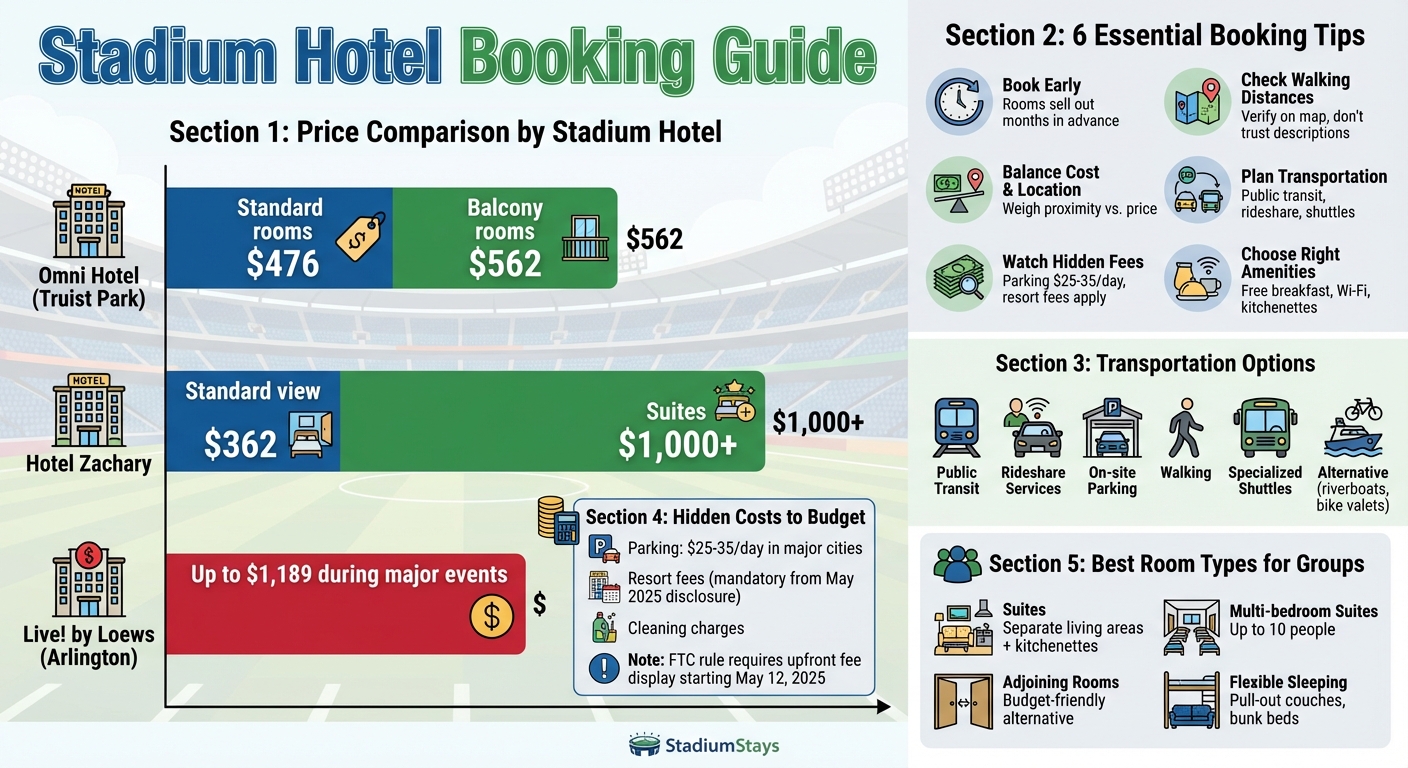
Stadium Hotel Booking: Price Comparison and Key Factors Guide · Image: SEObot
What to Consider When Booking Hotels Near Stadiums
When picking a hotel near a stadium, there are three key factors to think about: how close it really is, when to book for major events, and how to strike the right balance between price and convenience. Let’s break these down, starting with what "walking distance" actually means.
What Does Walking Distance Really Mean?
The term "walking distance" can be misleading. Some hotels claim to be walkable even if the walk feels more like a hike, while others are genuinely close, sometimes with direct paths or covered walkways leading you almost straight to the stadium gates. To avoid surprises, always double-check the distance on a map instead of relying solely on hotel descriptions. The best-case scenario? Staying at a property that’s part of an entertainment district or ballpark village, where you can step out of the lobby and practically be at the stadium.
Once you’ve figured out the distance, timing becomes the next big factor.
When Should You Book for Major Events?
Timing your booking is crucial, especially for high-demand events like playoffs, championship games, or major rivalry matchups. For these occasions, it’s smart to book as early as possible - rooms can sell out months in advance, and prices tend to climb as the event approaches. If you’re traveling from out of town, early booking also helps sync your hotel plans with flights and other travel arrangements. For less popular games, you might find last-minute deals, but options will be limited.
How to Balance Price, Location, and Convenience
Hotels right next to stadiums often come with hefty price tags, especially on game nights. For instance, at Omni Hotel near Truist Park, standard rooms start around $476, while balcony rooms go for $562. At Hotel Zachary, standard view rooms are priced at about $362, with suites running into the thousands. At Live! by Loews in Arlington, rates can soar to $1,189 during major events.
If those prices feel steep, consider staying a bit farther from the stadium. These hotels are usually more affordable, offer quieter surroundings, and might be closer to other attractions. However, you’ll need to factor in transportation to and from the game.
Also, keep in mind that non-refundable bookings can sometimes save you money, though they come with less flexibility - a critical point if you’re reserving far in advance.
How to Handle Game-Day Logistics
Game day can be hectic, with large crowds and unexpected expenses adding to the challenge. But with a little planning, you can turn potential chaos into a seamless experience. The key is to map out your transportation options, budget for hidden costs, and prioritize safety.
What Are Your Transportation Options?
Stadiums typically provide several transportation choices, such as public transit, rideshare services, on-site parking, walking, and even specialized shuttles. Some venues get creative, offering options like riverboats or bike valets to accommodate fans. To avoid last-minute headaches, plan your route ahead of time. Many stadiums are also stepping up their game by improving signage and deploying support staff to guide fans in and out more efficiently.
What Hidden Costs Should You Watch For?
Hidden fees can sneak up on you if you're not prepared. Starting May 12, 2025, a new FTC rule will require hotels and vacation rentals to display all mandatory fees - like resort and cleaning charges - upfront in their advertised prices. While this provides more transparency, the fees themselves aren’t going away. Parking is another common expense to keep in mind, especially in major cities where rates often range from $25 to $35 per day or more. Make sure to factor these costs into your game-day budget.
How to Stay Safe on Game Day
Safety should always be a top priority, especially when navigating large, energetic crowds. After the final whistle, thousands of fans often flood the exits at once, which can feel overwhelming. Stay alert in crowded areas and follow the venue’s safety guidelines to ensure a smooth exit.
What Hotel Features Matter Most for Sports Travelers?
When you're traveling for sports - whether as part of a team, with friends, or with family - the right hotel can make all the difference. It’s about finding a place that caters to your specific needs and enhances your overall experience.
Which Room Types Work Best for Groups?
For groups, suites are a top choice, offering separate living areas and kitchenettes for added flexibility. If you're traveling with a larger party, multi-bedroom suites are ideal, accommodating up to 10 people. These are perfect for families or groups of friends. For instance, the Palms Casino Resort in Las Vegas boasts the Hardwood Suite, a massive 10,000-square-foot, two-story space complete with an indoor basketball court, locker room, billiards table, bar, and whiskey room.
If suites aren’t an option, adjoining rooms are a budget-friendly alternative, providing extra space and connectivity. Rooms with flexible sleeping setups, such as pull-out couches or bunk beds, are also great for maximizing occupancy.
But it’s not just about the room layout - amenities play a big role too.
What Amenities Improve Your Game-Day Experience?
A good free breakfast can set the tone for the day, especially if it starts early or includes grab-and-go options. For teams or dedicated fans, reliable Wi-Fi is a must, whether you're reviewing game footage or coordinating schedules. If you're traveling with youth teams, having in-suite washers and dryers - like those available at Lake Buena Vista Resort in Orlando - can be a lifesaver.
For longer stays, fully equipped kitchens are invaluable. Sonesta's Sports Certified hotels, for example, offer spacious suites with full kitchens, making it easier to prepare meals and avoid eating out every day.
Of course, the hotel’s location can also elevate your trip.
Should You Consider Nearby Attractions?
Staying near the stadium often means you're in the heart of an entertainment district, surrounded by restaurants, bars, and other attractions. For example, if you're near Levi's Stadium in Santa Clara, California, you can visit California's Great America, the Winchester Mystery House, or Santana Row. Similarly, around AT&T Stadium in Arlington, Texas, you’ll find Six Flags Over Texas and the Fort Worth Stockyards Historic District.
These nearby attractions can turn a quick trip for a game into a memorable weekend getaway, especially if you're traveling with family or friends who aren’t as invested in the sports action.
How StadiumStays Makes Hotel Booking Easier
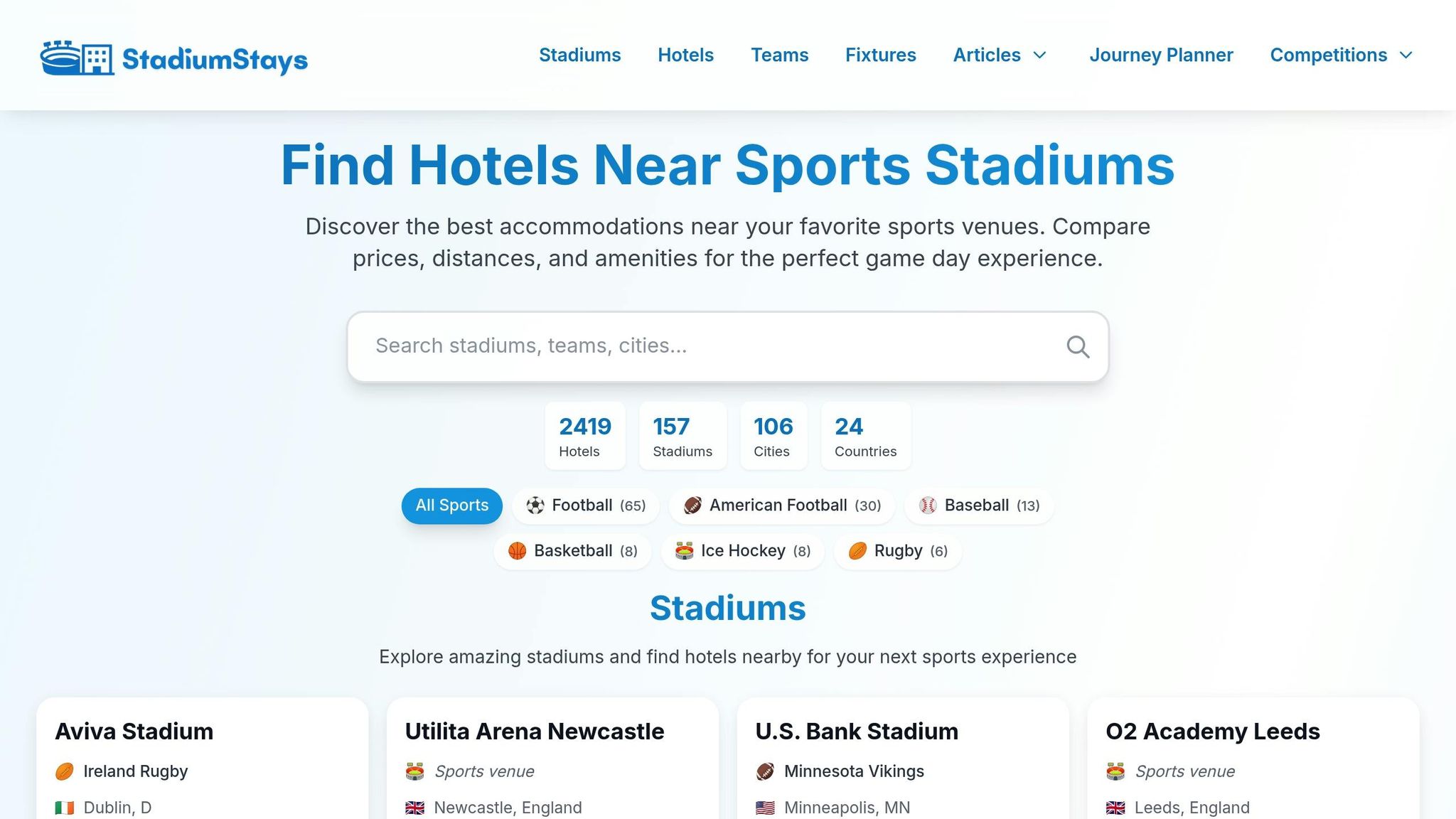
StadiumStays · Image: SEObot
Finding the perfect hotel near a stadium doesn’t have to be a hassle. With StadiumStays, the process is tailored specifically for sports fans, focusing on what matters most - proximity to the venue, easy access, and amenities to enhance your game-day experience. Here’s how you can search, compare, and book the best accommodations for your next big event.
Search Hotels by Stadium
The first step is simple: search for your stadium or city. StadiumStays has an impressive reach, covering 154 stadiums across 25 countries. Whether you’re gearing up for the Super Bowl, NCAA Final Four, or UEFA Champions League Final, the platform provides a curated list of hotels. These options highlight walkable access to the stadium, nearby fan zones, and local dining and nightlife spots. You can even refine your search by distance, price, or amenities like free breakfast to match your preferences.
Plan Routes and Compare Hotels
Once you’ve narrowed down your options, use the journey planner to map out walking distances and public transit routes to the stadium. This tool calculates travel times so you can plan your day with ease. You can also compare hotels side-by-side, taking into account factors like proximity to fan zones and the convenience of accessing game-day events. If you’re unsure about the best location, consult with StadiumStays’ sports-travel experts for personalized recommendations.
Find the Best Rates and Deals
Hotel prices near stadiums often surge on game nights, so timing your booking is key. StadiumStays helps you save with exclusive member prices, price drop alerts, and flash sales. While booking a month in advance usually secures better rates, the platform also offers last-minute deals for those spontaneous trips. Its comparison tools make it easy to sort by price, ensuring you find the best value. For major events like the Super Bowl or Summer Games, StadiumStays hand-picks options that balance affordability with convenience, so you can enjoy the excitement without breaking the bank.
Conclusion
Booking a hotel near a stadium takes some thoughtful preparation. The most important step? Plan ahead. For big events, rooms can sell out months in advance, and prices tend to climb as game day gets closer. Many major hotel chains let you book up to 395 days in advance, so securing your spot early is a smart move.
If you're looking to save money, flexibility is your best friend. Consider staying on less busy days or in neighborhoods a bit further from the stadium. Booking directly with hotels can sometimes get you better rates or perks. Also, pay close attention to cancellation policies - while flexible rates might cost more upfront, they can save you hassle if your plans change.
Beyond saving money, logistics are key. The location of your hotel can make or break your game-day experience. Walking distances vary by venue, so use journey planners to estimate travel times. Don’t forget to check for amenities like free breakfast, parking, or kid-friendly options, depending on your needs.
For sports travelers, StadiumStays simplifies the process. With access to 154 stadiums across 25 countries, it helps you find hotels close to venues, compare options easily, and access exclusive deals. Whether you're a seasoned fan or heading to your first game, planning ahead ensures a hassle-free and memorable game-day experience.