
Booking hotels for college football games can be tricky, especially in smaller towns where demand often exceeds supply. Here's a quick guide to help you secure the best deals and avoid last-minute stress:
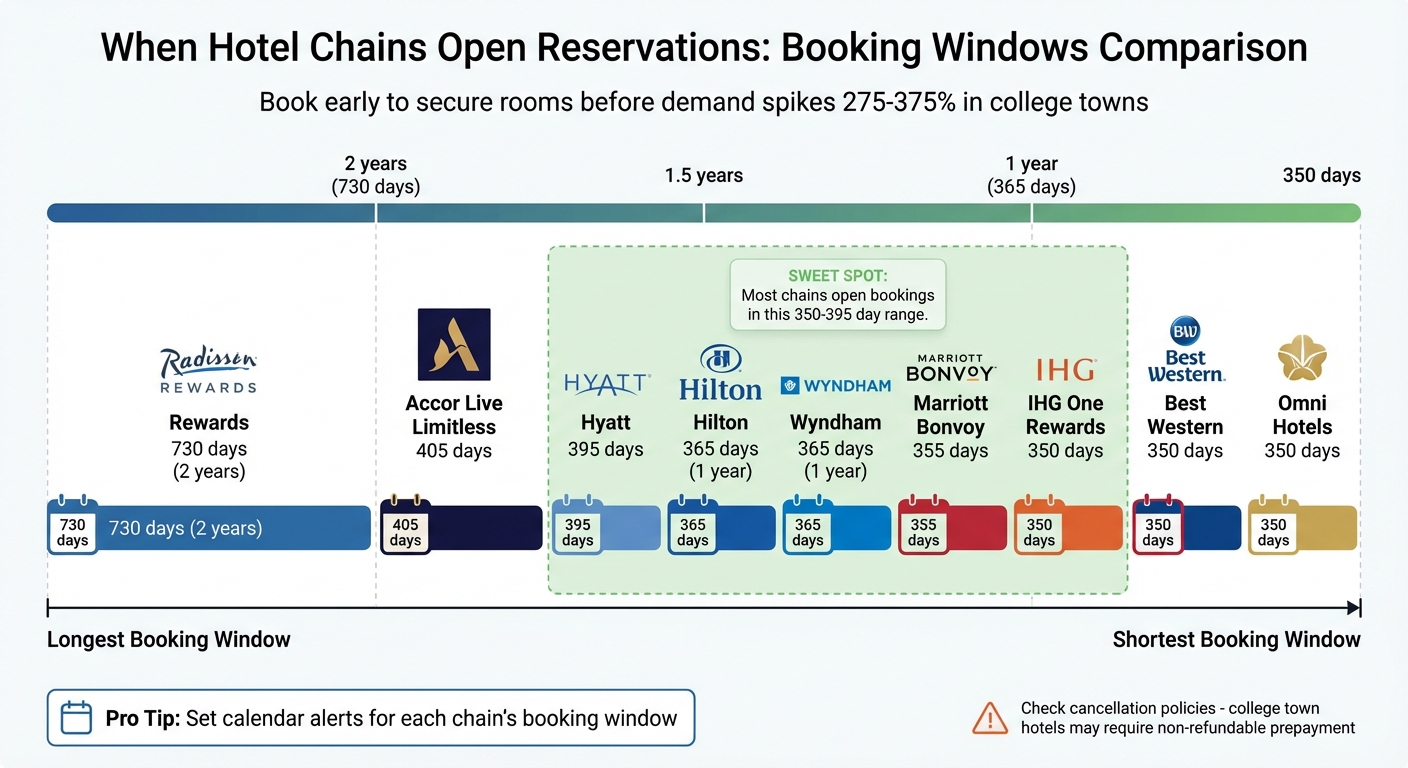
- Book Early: Major hotel chains open reservations 350–395 days in advance. Popular chains like Hyatt, Hilton, and Marriott have specific booking windows, so set alerts to grab rooms as soon as they’re available.
- Flexible Cancellations: Reserve rooms with free cancellation policies to hold multiple dates until game schedules are finalized.
- Watch for Cancellations: Check for last-minute availability 24–48 hours before check-in, as cancellations can free up rooms at better rates.
- Consider Nearby Towns: If local hotels are booked or overpriced, look for accommodations in towns within a 30-minute drive.
- Use Tools: Platforms like StadiumStays can simplify your search by showing hotels near stadiums with transparent pricing and instant booking options.
Planning ahead and using these strategies can save you money and ensure you have a place to stay on game day.
Booking 350-395 Days in Advance
Hotel Chain Booking Windows for College Football Games · Image: SEObot
Why Booking Early Works
In small college towns, hotel rooms are in short supply, especially during game weekends. The surge in demand for marquee matchups can be staggering - rising by 275% to 375%, as seen in Tuscaloosa and Columbus in 2025. With such spikes, every available room is quickly claimed.
Booking 350–395 days in advance ensures you secure a room before prices skyrocket. Plus, many fans reserve multiple weekends and later cancel the ones they don’t need once the game schedule is finalized.
How to Book Early
Different hotel chains have varying booking windows, so knowing when reservations open is key. For instance, Hyatt allows bookings up to 395 days ahead, while Hilton and Wyndham cap theirs at 365 days. Marriott opens reservations 355 days in advance, and chains like IHG, Best Western, and Omni Hotels start at 350 days.
| Hotel Chain | Booking Window |
|---|---|
| Radisson Rewards | 730 days |
| Accor Live Limitless | 405 days |
| Hyatt | 395 days |
| Hilton | 365 days |
| Wyndham | 365 days |
| Marriott Bonvoy | 355 days |
| IHG One Rewards | 350 days |
| Best Western | 350 days |
| Omni Hotels | 350 days |
Next, we’ll dive into strategies for handling last-minute cancellations and waitlists.
Watching for Cancellations and Waitlists
Even if a hotel shows "sold out" online, don't lose hope - rooms can pop back up thanks to last-minute cancellations. These cancellations often happen within 24–48 hours before arrival, though some price drops can start as early as two weeks before check-in. Hotels would rather fill a room at a discount than leave it empty, so prices often dip during these final hours. Matt Clarke, Vice President of Marketing for North America at Kayak, puts it this way:
- "Our data shows that waiting until you're about two weeks out from checking in is when we do see prices sort of starting to drop".
If you're willing to be patient and keep an eye on availability, you might snag a great deal. Another strategy? Getting on a waitlist.
How to Use Hotel Waitlists
To get on a hotel's waitlist, skip the chain's general hotline and call the hotel directly. The front desk often manages its own waitlist, which might not be visible on online booking platforms. This tactic can be especially effective for boutique hotels or smaller properties near popular locations, like college campuses. NerdWallet advises:
- "Cancellations happen, so keep checking if you don't find immediate room availability. You can also call the hotel directly to see if they'll add you to a waitlist".
Persistence can pay off when it comes to securing a room.
Setting Up Availability Alerts
Automated tools like OpenHotelAlert](https://openhotelalert.com/) and PointsYeah can make the search even easier. OpenHotelAlert offers free monitoring - just input your preferred hotel and travel dates, and you'll get a text or email as soon as a room becomes available. PointsYeah focuses on award-eligible rooms, sending real-time alerts for high-demand properties. These tools work around the clock, ensuring you're notified the moment something opens up. Pairing these alerts with your early booking efforts can help you stay ahead and score a room before someone else does.
Booking 2-3 Months Before Game Day
If you missed the chance to book early, the two-to-three month window offers a solid middle ground between cost and availability. This timeframe works well for fans who couldn’t plan a year in advance but still want to avoid the stress of last-minute booking. While rates may not be as low as they are for early planners, you can still find decent options - especially if you’re flexible about location.
For most hotels, booking one to two months ahead often works well. However, waiting until just three to four weeks before the game can increase rates by 5%–6% on average. In smaller college towns where hotel options are limited, securing a reservation a few months in advance is especially important.
Balancing Cost and Availability
When booking in this timeframe, you’ll need to weigh the price against your preferred location. In high-demand towns like Gainesville, nightly rates can soar to $850 during major events. On the other hand, cities like Chapel Hill, Austin, and Eugene tend to keep rates under $250, even during busy weekends.
It’s also a good idea to check the local event calendar before locking in a reservation. If festivals, marathons, or concerts overlap with the game, you might face even tighter availability and higher prices. Larger cities like Los Angeles or Seattle generally have a bigger hotel supply, which helps keep rates more stable, even during major events.
For those looking at budget-friendly chains, this two-to-three month window is still a good opportunity. These properties typically don’t require the six-to-twelve month advance booking that boutique or luxury hotels often demand. If accommodations in your chosen town are limited, consider staying in a nearby area. Just remember to account for post-game traffic when planning your return trip.
Finally, keep an eye out for hotels with flexible cancellation policies to give yourself more options as game day approaches.
Using Flexible Cancellation Policies
Flexible cancellation policies can be a lifesaver when game schedules are still up in the air. College football schedules, for example, often aren’t released until January or February. Booking rooms with free cancellation lets you reserve several weekends without committing. Once the schedule is set, you can cancel the dates you don’t need and keep the ones that work for you.
It’s smart to lock in a flexible rate early. This not only secures your room before prices skyrocket but also allows you to cancel without penalty if rates drop closer to game day. As Ted Rossman, Credit Card Senior Industry Analyst at Bankrate, explains:
- "The small initial savings isn't worth it if you have to postpone your trip... Maintaining that flexibility is key".
Of course, this flexibility comes at a price. Prepaid, non-refundable rates are usually 20% to 30% cheaper than flexible ones. But if your plans change - due to illness, work, or a shift in your team’s schedule - you could lose your money. For big game weekends, like those in Gainesville where rooms can hit $850 per night, paying more for flexibility might be worth it. In the unpredictable world of college football travel, having options is invaluable.
How to Make Tentative Bookings
If you’re booking tentatively, use the "free cancellation" filter on booking platforms to find flexible options. Look for terms like "pay when you arrive" or "pay at property", which often allow you to cancel without penalty. Avoid listings marked "prepaid" or "advance purchase", as these are usually non-refundable.
Always check the fine print before confirming your reservation. For peak weekends - think rivalry games or homecoming - hotels may have stricter cancellation policies. If the details aren’t clear online, call the hotel directly to confirm. Booking directly through a hotel’s website can sometimes get you better cancellation terms or loyalty perks, and many hotels will match third-party rates.
If you’re using hotel points, double-check the cancellation policy for award stays. Many loyalty programs allow you to cancel point bookings at no cost, even if cash reservations come with stricter rules. This can be a smart way to keep your options open while waiting for the game schedule to be finalized.
Staying in Nearby Towns
If booking early and having flexible cancellation policies don't work out, looking into nearby towns can be a smart backup plan for finding lodging. When hotels in the immediate area are either fully booked or charging sky-high rates, neighboring towns often offer more affordable options. The trade-off? You'll likely face a longer commute. This approach is especially useful for games in smaller college towns like Auburn, Alabama, or Athens, Georgia, where accommodations can be scarce during peak times. By widening your search, you can complement your early booking efforts and increase your chances of securing a place to stay.
Finding Hotels in Neighboring Areas
One effective strategy is to look for hotels in towns within a 30-minute drive of the stadium, particularly during non-game hours. Larger cities near college campuses - like Austin, Columbus, or Madison - tend to have more hotel options and are often conveniently located near major airports. This makes travel logistics much easier. Travel expert Melanie Fish from Vrbo highlights the advantages of these cities:
- "Some college towns require a lot of planning and coordination to visit, but there are still great options for fair-weather fans who want to take an easy weekend trip and catch a game. Cities like Austin, Columbus and Madison have great game day atmospheres with campuses less than 10 miles from the airport".
Before locking in your reservation, check the event calendar for your backup town. Events like festivals or marathons can drive up hotel prices unexpectedly. For instance, during playoff weekends in Columbus, hotel rooms in nearby areas have been priced around $140 - significantly cheaper than the rates closer to Ohio Stadium.
Planning Transportation to the Stadium
Staying outside the main town can save you money, but it does add some challenges, like parking fees and post-game traffic. Parking near stadiums often costs $25–$30, so securing a parking pass in advance, complete with route maps, can make your exit smoother.
Another option to consider is university-run shuttle services. For example, Ohio State offers a free shuttle from its West Campus parking lots, running from six hours before kickoff until an hour after the game ends. Auburn University provides a similar service with its Tiger Transit buses, which start operating three to four hours before SEC games at no charge. These shuttles not only save on parking fees but also help you avoid the worst of the traffic jams after the game.
Using StadiumStays for Hotel Planning
StadiumStays · Image: SEObot
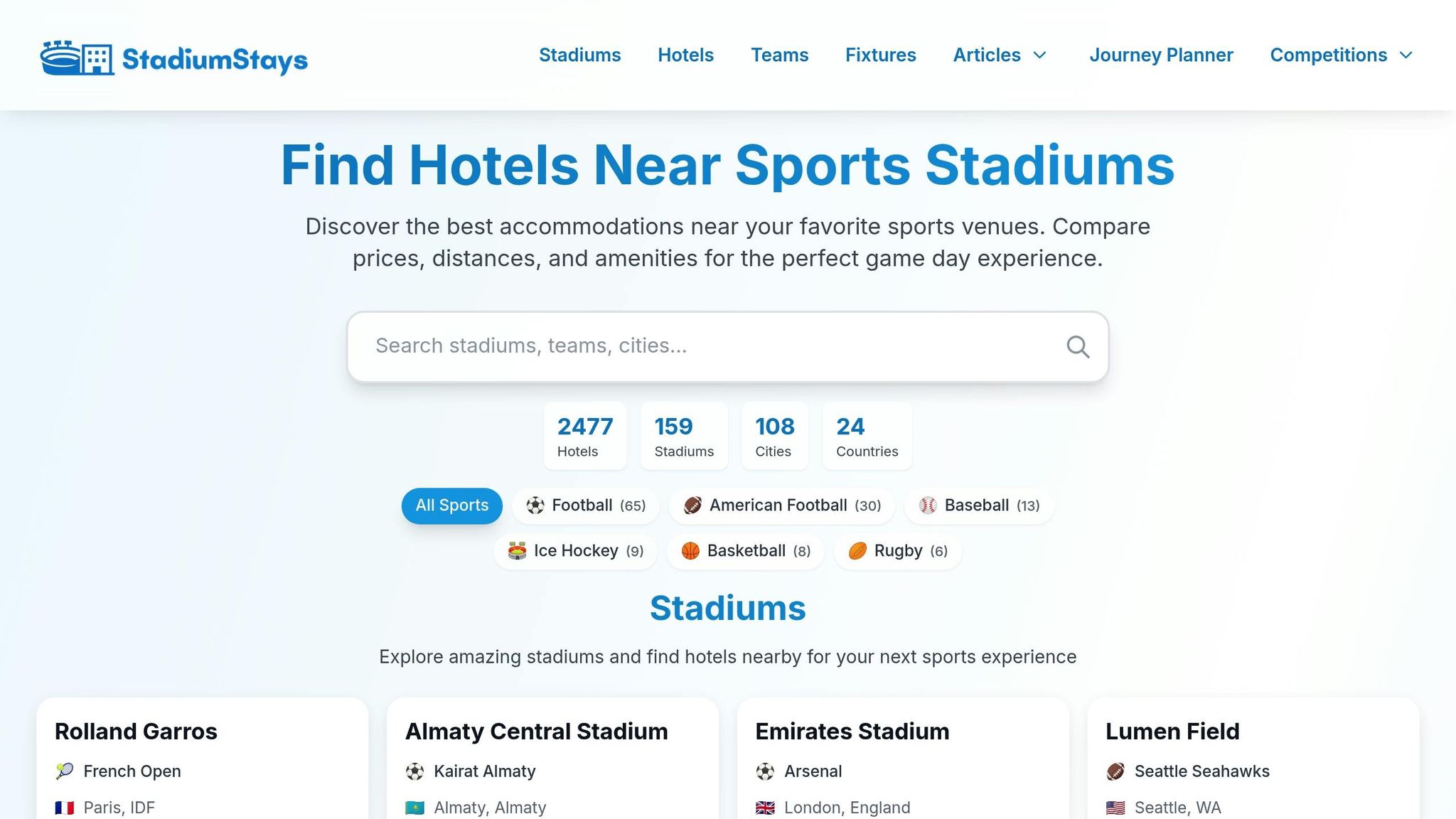
If you're planning a trip to catch a U.S. college football game, StadiumStays can make finding the perfect hotel a whole lot easier. This platform specializes in locating accommodations near college football stadiums, offering tools that simplify the process and integrate well with other travel strategies.
How StadiumStays Simplifies Hotel Searches
StadiumStays takes the guesswork out of hotel hunting with its distance filters, which pinpoint hotels within a 0.3–0.4-mile radius of stadiums. Even better, it shows upfront pricing that includes all taxes and fees, making cost comparisons a breeze. This feature is especially useful in sprawling cities like Austin or Columbus, where hotel options can be scattered. Knowing the total cost upfront helps you avoid surprises and compare properties clearly, whether you're booking months ahead or snagging a last-minute deal.
Pairing StadiumStays with early booking strategies increases your chances of locking in a great room.
Saving Time with StadiumStays
Instead of juggling multiple websites, StadiumStays brings everything you need into one convenient platform. Beyond its filtering and pricing tools, the platform speeds up planning with a route feature that calculates realistic travel times from your hotel to the stadium. This is particularly handy if you're staying in a nearby town and need to arrange transportation, like shuttles.
Another bonus? StadiumStays supports instant booking. This is a game-changer when rooms near popular stadiums sell out quickly. Whether you're tracking cancellations or booking within the 2–3 months leading up to game day, immediate confirmation ensures you don’t miss out.
Conclusion
Plan ahead to minimize stress. By booking early and opting for flexible cancellation policies, you can stay ahead of price hikes and secure your spot without locking yourself in. As travel expert Samantha Brown wisely puts it, "reserve early, book late". This strategy provides peace of mind while keeping your options open.
Flexibility is just as important as early booking. Choosing reservations with flexible cancellation policies allows you to adapt as prices change. For example, flexible rates can offer significant savings, especially in high-demand college towns. Using hotel loyalty points instead of cash during peak seasons can also stretch your budget further.
StadiumStays simplifies the process of finding hotels by offering instant booking, transparent pricing (taxes included), and accurate travel estimates. This makes it easier to spot last-minute cancellations or secure deals during the crucial 2–3 months leading up to kickoff.
FAQs
When is the best time to book a hotel for a college football game?
If you want to lock in a room and dodge steep price hikes, the smartest move is to book your hotel as soon as reservations become available - usually 350 to 395 days in advance for most major hotel chains. Can’t book that far ahead? No worries. Just try to secure your stay a few months in advance. Hotels near stadiums tend to fill up fast, especially for big games, so getting a jump on planning can save you both cash and headaches.
What can I do if hotels near the stadium are already sold out?
If hotels near the stadium are already booked, don’t worry - there are still ways to secure a place to stay. One option is to keep checking for cancellations, as rooms often open up as the event date approaches. It’s also worth calling the hotel directly to see if they offer a waitlist you can join.
Another approach is to broaden your search to include nearby towns or areas slightly farther from the stadium. With a bit of planning, arranging transportation can make these options just as convenient. Additionally, platforms like StadiumStays are great for comparing prices, amenities, and distances, helping you find the best available alternatives in no time.
How can I book hotels for college football weekends with flexibility?
When planning hotel stays for college football weekends, keeping your options open can make all the difference. Here are some ways to stay ahead of the game:
- Book early: Many hotels let you reserve rooms up to a year in advance. Jumping on this opportunity can help you snag the best choices before they’re gone.
- Pick flexible rates: Go for bookings with refundable or flexible terms. These options allow you to adjust or cancel your reservation without hefty fees.
- Take advantage of loyalty programs: Hotel loyalty programs or fan-specific packages often come with perks like easier cancellation policies, giving you more breathing room.
Tools like StadiumStays make the planning process easier by letting you compare prices, amenities, and proximity to the stadium - all while highlighting flexible booking options. By thinking ahead and using these tips, you can focus on enjoying game day without stressing over last-minute travel hiccups.