Stadium Hotels vs City Center: Which Costs Less?
When planning a trip for a sports event, your choice of accommodation can significantly impact your budget and experience. Should you stay near the stadium for convenience or in the city center for variety? Here's the key takeaway:
- Stadium Hotels: Ideal for sports fans prioritizing proximity. Rates can be lower on non-event days but often surge during games. They save on transportation costs but may have limited dining and entertainment options.
- City Center Hotels: Great for travelers who want access to urban attractions. Rates are more stable, but you'll likely spend more on transit to the stadium. They offer diverse dining, shopping, and cultural activities.
Quick Comparison
| Factor | Stadium Hotels | City Center Hotels |
|---|---|---|
| Room Rates | Cheaper off-event days, higher during games | More consistent year-round |
| Proximity to Stadium | Walking distance | Requires transit |
| Parking Costs | Often free or low-cost | Typically expensive |
| Dining Options | Limited, game-focused | Wide variety |
| Local Attractions | Focused on the game | Museums, shopping, nightlife |
Main Differences Between Stadium Hotels and City Center Hotels
What Qualifies as a Stadium Hotel vs City Center Hotel
A stadium hotel is all about location - it’s either part of or right next to a sports venue. Take the Toronto Marriott City Centre at Rogers Centre, for example. This hotel is actually built into the stadium, offering select rooms with direct views of the field. It’s the kind of setup that makes game day feel like a front-row experience right from your room.
On the other hand, city center hotels are located in bustling downtown areas where dining, shopping, and entertainment are within walking distance. These hotels might not give you a view of the game, but they immerse you in the heart of the city’s activities. Their central locations make them ideal for exploring urban attractions, offering a completely different kind of getaway. Pricing strategies between these two types of hotels often reflect their unique focus, which we’ll touch on later.
Next, let’s dive into the amenities and the kinds of travelers each type attracts.
Amenities and Guest Types
Stadium hotels are designed for die-hard sports fans. For example, at the Toronto Marriott City Centre, guests can book rooms with field views and enjoy heightened security during major events. These hotels often include features that cater to groups, like spacious rooms and on-site dining options tailored to game-day crowds. The Sportsnet Grille at Rogers Centre, for instance, offers great views of the field through its large windows, making it a favorite for fans during games.
City center hotels, however, cater to a broader range of guests. These properties focus on accessibility to local hotspots like restaurants, museums, theaters, and shopping districts. Their guest list often includes business travelers, families, and tourists who want to experience everything the city has to offer - not just a game. While they don’t integrate with sports venues, they make up for it by putting the entire city at your doorstep.
Why Sports Travelers Pick Each Location
For sports fans, stadium hotels are all about convenience and proximity. Staying right next to - or even inside - the venue means no dealing with traffic, parking, or crowded transportation. And for those who might not have tickets to the game, a field-view room offers a unique way to soak in the atmosphere. From watching batting practice to seeing the stadium come to life, it’s a behind-the-scenes experience that’s hard to beat.
City center hotels, however, attract travelers looking for more than just the game. For fans attending a series or extended event, these hotels let them balance sports with exploring the city. Whether it’s trying out local restaurants, visiting museums, or hitting up shopping districts, a city center stay turns a sports trip into a well-rounded urban adventure. Of course, the convenience and variety of each location come with their own pricing trade-offs, which we’ll explore in the next section.
Source: RAG Information on Stadium Hotels
Price Comparison: Stadium Hotels vs City Center Hotels
Average Room Rates
When it comes to pricing, stadium hotels tend to have a split personality. On non-event days, they often offer lower rates, but those prices can skyrocket when a big game or event is happening. City center hotels, on the other hand, usually maintain more consistent pricing throughout the week. For example, in cities like New York, Chicago, and Los Angeles, hotels in the city center see steady demand from both leisure and business travelers, which helps keep their rates relatively stable. This contrast in pricing patterns is key to understanding how event schedules impact the overall cost of accommodations.
How Game Days and Seasons Affect Prices
Game days can significantly impact the cost of staying near a stadium. Hotels close to sports venues often raise their rates to capitalize on the influx of fans during home games. In contrast, city center hotels tend to show less dramatic price shifts, regardless of the sports calendar. Interestingly, during non-event periods, stadium hotels may even offer rates that are comparable to - or sometimes cheaper than - those in the city center. This makes timing a crucial factor for travelers looking to save money.
Extra Costs to Consider
Room rates are just one part of the equation. Additional expenses can also play a big role in determining the total cost of your stay. For instance, staying at a stadium hotel on game day might save you money on transit or parking fees, since you’ll be close to the venue. On the flip side, city center hotels might reduce transportation costs if your plans involve exploring urban attractions. Dining options also differ: city centers typically offer a wide variety of restaurants at different price points, while areas near stadiums might have fewer choices, often geared toward game-day crowds.
Ultimately, your total accommodation cost will depend on a mix of factors, including room rates, extra expenses, and the timing of your trip in relation to the sports schedule.
Hotel Rooms Overlooking Football Stadiums
What Affects Cost and Convenience
Picking the right hotel isn’t just about comparing room prices. Factors like location, nearby attractions, and parking options can make a big difference in both your budget and overall experience.
Distance and Transportation Costs
How close your hotel is to the stadium or city center can significantly impact your travel expenses and convenience. Staying near the stadium often means you can walk to the game, saving on rideshare, taxi, or public transit costs. On the other hand, staying in the city center might mean spending more on transportation if you’re attending multiple games. However, the trade-off could be worthwhile if you’re also planning to explore the area’s attractions. This brings us to another key consideration: access to local activities.
Access to Local Attractions
City center hotels put you right in the middle of the action, with easy access to museums, shopping, historic landmarks, and a wide variety of dining options. This is especially appealing if you’re traveling with family or friends who want more than just a sports experience. While newer stadium developments may feature restaurants and shops, they often don’t offer the same range of activities you’d find in a bustling city center. Now, let’s look at how parking fits into the equation.
Parking Options and Costs
If you’re driving, stadium-area hotels usually provide free or low-cost parking, which can save you a lot compared to the higher fees often charged by city center hotels. These urban hotels may even require valet or garage parking, adding to your costs. On game days, parking near the stadium can get pricey, so staying at a nearby hotel could help you avoid those extra fees. For those relying on public transit, city center amenities might outweigh the lack of parking concerns altogether.
Pros and Cons of Each Option
Choose what matters most to you: the convenience of being close to the action or the chance to experience a wider range of city attractions.
Side-by-Side Comparison
Here’s a breakdown of the key differences between staying at stadium hotels and city center hotels:
| Factor | Stadium Hotels | City Center Hotels |
|---|---|---|
| Average Room Rate | Often cheaper on non-game days but can skyrocket during events | Rates are more consistent throughout the year |
| Transportation to Venue | Usually within walking distance, saving on transport costs | Often requires rideshares or public transit, adding to expenses |
| Parking | Free or low-cost parking is common, avoiding surge fees on busy days | Parking is typically more expensive, often with valet or high daily rates |
| Dining Options | Limited to venue-focused spots, which may lack variety | A wide range of restaurants, bars, and cafes within easy reach |
| Local Attractions | Focused on the game-day experience with fewer amenities nearby | Close to museums, shopping, historic sites, and nightlife |
| Noise Level | Quiet on non-event days but lively during games | Constant urban buzz with street and nightlife activity |
| Best For | Great for sports fans, families, or short trips centered on a game | Perfect for combining sports, sightseeing, and business travel |
| Booking Flexibility | Availability and rates fluctuate around major events | More predictable pricing and availability year-round |
Stadium hotels are perfect for sports fans who want to avoid the hassle of post-game transportation and enjoy proximity to the venue. On the other hand, city center hotels offer a richer variety of activities and attractions, making them ideal for travelers looking to mix sports with sightseeing or business. Your choice boils down to what you value most: game-day convenience or a broader city experience.
Examples and Booking Tips
Understanding the differences between stadium hotels and city center hotels can make booking your stay much easier. Stadium hotels put you close to the action, often just a short walk from the venue, but they might not have as many dining or entertainment options. On the other hand, city center hotels let you soak in the buzz of urban life, though you’ll likely need to take a short ride to get to the stadium. Below, we’ll share some examples and tips to help you decide.
Hotel Examples
Stadium hotels are all about convenience. Being within walking distance of the venue means you can get to game day events quickly and without hassle. However, since they’re located near the stadium, dining and entertainment choices in the area might be limited.
City center hotels offer a different kind of experience. While you’ll need to plan for a short ride to the stadium, staying in the heart of the city gives you access to a wider range of restaurants, shops, and attractions, making your trip more dynamic.
Using [StadiumStays](https://stadiumstays.com/)
StadiumStays · Image: SEObot
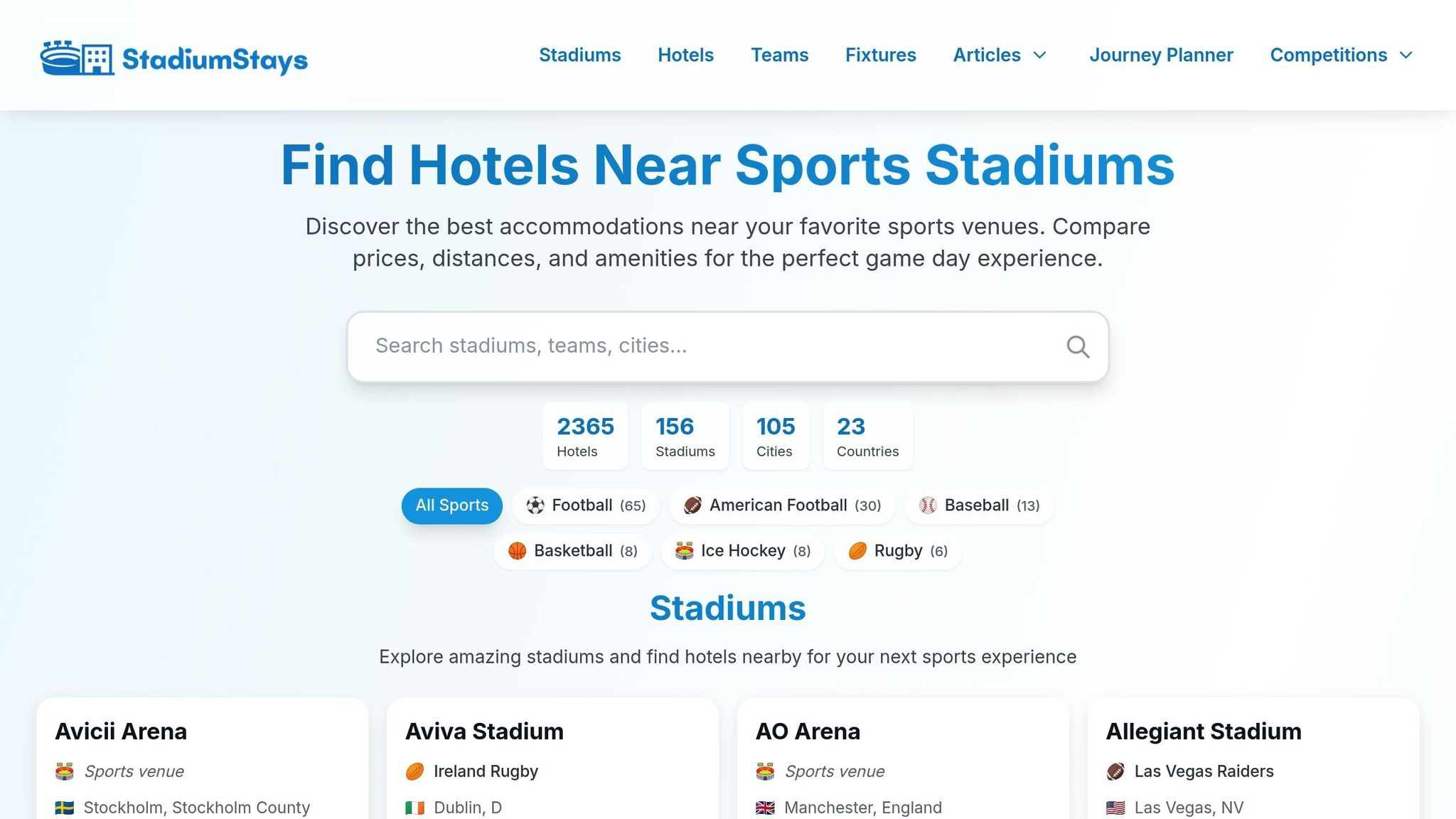
StadiumStays is a handy tool for sports travelers looking for accommodations near their favorite venues. Covering 154 stadiums across 25 countries, it’s designed to help you find hotels that balance proximity with convenience.
Here’s how it works: Choose your stadium and game date, and the platform will show you nearby hotels, sorted by walking distance and amenities like early check-in or breakfast availability.
What’s more, StadiumStays includes a built-in journey planner. This feature maps out the best routes from your hotel to the stadium, complete with estimated walking times and public transit options. It’s a great way to navigate an unfamiliar city and ensure you’re always on time for the big game.
Conclusion: Choosing the Right Hotel Location
Deciding between a stadium hotel and a city center hotel comes down to what matters most to you. Are you looking for convenience and proximity to the game? Or do you want to immerse yourself in everything the city has to offer?
If being close to the action and cutting down on travel time is your main goal, a stadium hotel is probably your best bet. You’ll save time, avoid the hassle of navigating unfamiliar transit systems, and possibly spend less on transportation during your trip.
On the other hand, city center hotels offer a richer travel experience. While they might cost more upfront, they put you right in the middle of the dining, nightlife, and sightseeing scene. If exploring the city is part of your plan, these hotels are a great option for soaking up everything the destination has to offer before or after the game.
Your budget also plays a big role. Stadium hotels tend to be more affordable when there’s no game, while city center hotels often have steadier rates. Keep in mind that prices can skyrocket on game days, so booking early is a smart move.
FAQs
What factors should I consider when choosing between a stadium hotel and a city center hotel for a sports event?
When choosing between a hotel near the stadium and one in the city center, a few key factors should guide your decision: cost, distance to the venue, and transportation options. Staying close to the stadium can save you both time and transportation expenses, especially if the event runs late into the night. On the other hand, city center hotels often provide easier access to a variety of restaurants, attractions, and public transit.
Your choice will depend on your budget and travel goals. If your trip revolves around the event, a stadium hotel might be the most convenient option. But if you’re looking to explore the area beyond the event, a city center location could offer a more well-rounded experience.
How do hotel costs near stadiums compare to city center hotels on game days?
Hotels close to stadiums often hike up their prices on game days, especially during major events. For example, a room with a stadium view during a big event like the World Series can run into the thousands per night. On the other hand, standard hotel rates in city centers across the U.S. typically fall between $80 and $250 per night, depending on the area and the type of amenities offered.
While staying near a stadium is undeniably convenient, choosing accommodations in the city center can be a more cost-effective alternative - even when you include transportation expenses. Ultimately, your decision should weigh the cost, proximity, and what matters most to you during your trip.
What are the best ways to find affordable hotel rates during sports events?
Finding affordable hotel rates during sports events can feel like a daunting task, but there are a few clever ways to cut costs. Location plays a big role in pricing - hotels right next to the stadium or event venue often charge premium rates. If you're open to staying a little farther out and factoring in transportation costs, you can often snag better deals.
Another big money-saver? Booking early. Hotel prices usually climb as the event date gets closer, so locking in your reservation well in advance can help you avoid those last-minute price hikes. You might also want to explore alternative accommodations. Chain hotels near airports or in less central areas often come with lower price tags compared to downtown spots.
By carefully weighing location, timing, and convenience, you can score a stay that works for both your budget and your travel plans.