

How to Book Stadium Hotels for Less: 8 Money Tips
Finding affordable hotels near stadiums during game weekends can be a challenge, especially with high demand driving prices up. But you can save money with the right strategies. Here's how:
- Use [StadiumStays](https://stadiumstays.com/): Search by stadium or event, filter by price and amenities, and find nearby hotels with public transit access.
- Book Early: Reserve months in advance to secure better rates and availability. Opt for free cancellation to adjust if prices drop.
- Travel on Weekdays or Off-Peak Dates: Weekday stays and off-season games often cost less than weekends or playoffs.
- Stay Farther Away: Hotels a few miles from the stadium are usually cheaper. Plan for transit or driving time.
- Bundle Deals: Combine hotel bookings with flights or tickets for potential savings.
- Use Loyalty Programs: Earn points or get perks like member discounts and free nights through hotel rewards programs.
- Consider Alternatives: Motels, inns, and vacation rentals can be budget-friendly, especially for groups.
- Flexible Rates: Choose refundable bookings to rebook at lower rates if prices change.
These tips can help you stay close to the action without overspending. Start planning early and use tools like StadiumStays to simplify your search.
1\. Use [StadiumStays](https://stadiumstays.com/) to Find Hotels Near Venues
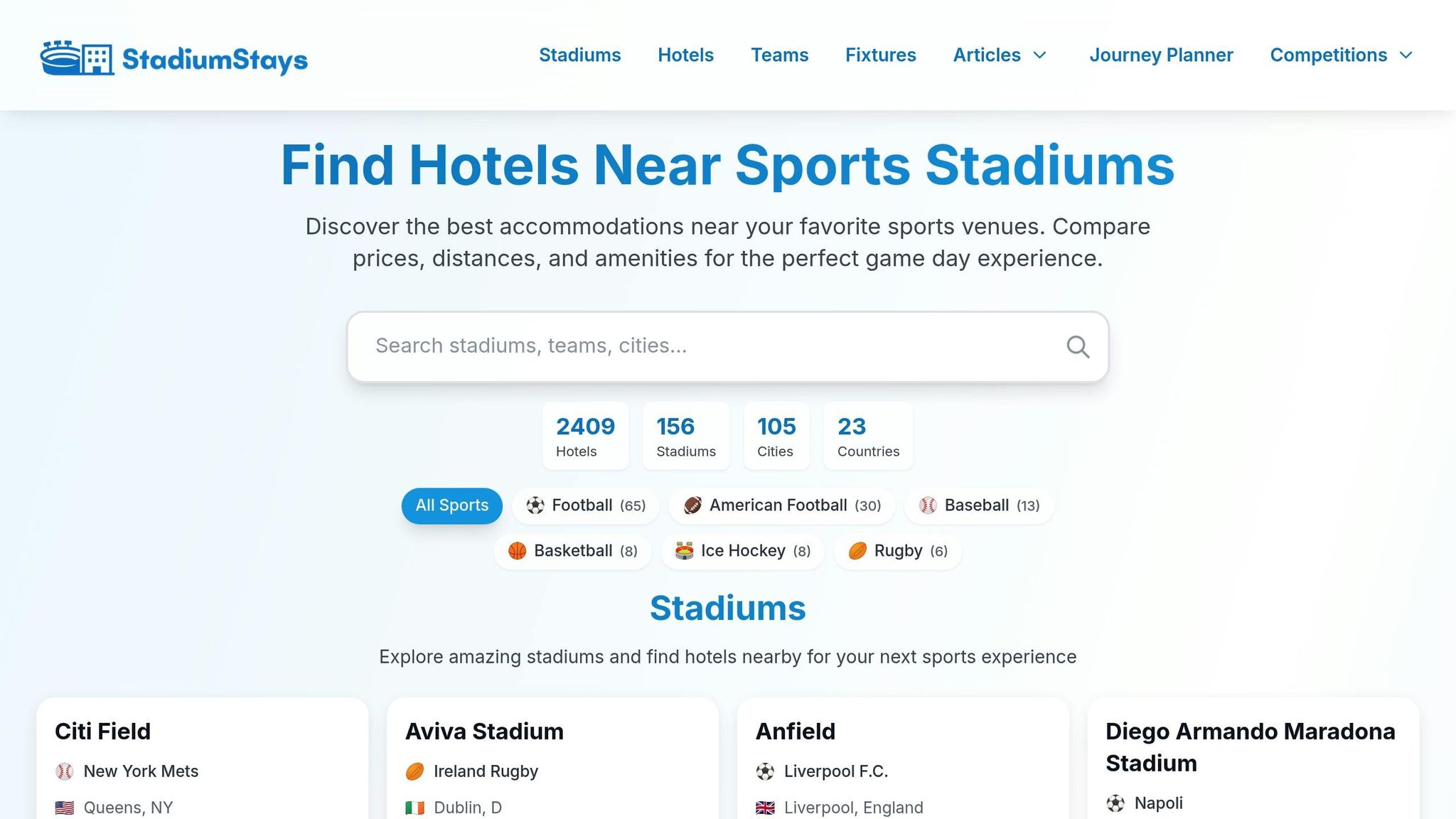
StadiumStays · Image: SEObot
Finding a hotel near a stadium doesn't have to mean scrolling endlessly through generic listings. With StadiumStays, you get a curated selection of hotels that are not only close to stadiums but also near fan zones, restaurants, and nightlife. It’s a time-saving way to ensure your accommodation hits the sweet spot between convenience and budget without the hassle of sorting through irrelevant options.
What makes StadiumStays stand out is its focus on accessibility. The platform prioritizes hotels with easy access to public transportation and efficient routes to venues - key features when you're trying to make it to kickoff or navigating the post-event rush. Whether you're heading to NRG Stadium for a Houston Texans game or catching an event at Orange Vélodrome, StadiumStays helps you stay close to the action.
Search by Stadium Name or Event
Using StadiumStays is simple. Just type in the name of the stadium or the event you're attending. For example, if you’re planning to watch the Houston Texans, searching for "NRG Stadium" or "Houston Texans games" will instantly show you hotel options nearby that match your travel dates.
This streamlined search approach removes the guesswork, delivering results tailored specifically for sports fans.
The platform covers an impressive 154 stadiums across 25 countries, catering to multiple sports like American football, soccer, basketball, baseball, and rugby. Whether you’re planning for a local game or an international event, StadiumStays has you covered.
Filter by Price and Amenities
Once you've searched by stadium or event, the filtering tools help you fine-tune your options and save money. You can sort hotels by star rating, ranging from 2-Star to 5-Star properties, which gives you an easy way to balance quality and price.
Each hotel listing includes clear and useful details. For example, the Guest Rating (out of 5, such as ★4.6/5) offers insight into overall satisfaction, while the Distance to Stadium metric shows both miles and estimated walking or driving times. These details let you weigh the convenience of proximity against cost, helping you decide if a slightly longer walk is worth a lower price.
Additionally, the platform highlights specific amenities for different hotel categories. Whether you’re looking for premium accommodations, exceptional service, or shuttle options, you’ll know exactly what’s included. These tools make it easier to find a hotel that fits your needs and budget, ensuring a stress-free game day experience.
2\. Book Months in Advance
Planning ahead can make a big difference when it comes to saving money and securing the best accommodations near stadiums. Booking months in advance not only helps you lock in better rates but also ensures you have a wider selection of hotels to choose from. Waiting too long often means higher prices and fewer options, especially as game day approaches.
When booking, go for flexible rates that include free cancellation. While prepaid rates might seem like a bargain at first, they don’t allow you to adjust if prices drop later. Most hotels let you cancel for free up to 24–48 hours before check-in, giving you the chance to rebook at a lower rate if prices go down. This way, you can save money without taking on unnecessary risks.
Track Prices After Booking
Just because you booked early doesn’t mean you’re stuck with the initial price. Hotel rates can change frequently - sometimes even daily or weekly. Make it a habit to check prices periodically after your reservation. Use the same booking platform or the hotel’s official site to compare the current rate for your room and dates. If you find a better deal, simply cancel your original booking (if it’s refundable) and rebook at the lower price.
To make this process easier, take advantage of price tracking tools offered by platforms like Google Hotels and Kayak). These tools let you set up alerts for price drops on your chosen search. When you get a notification, act quickly - rates can change again just as fast.
Another smart move is to contact the hotel directly if you spot a lower rate after booking. Many hotels are willing to match the lower price or adjust your reservation, saving you the trouble of canceling and rebooking. Staying proactive with these strategies not only helps you save money but also sets you up for a smoother planning process.
3\. Travel During Weekdays or Off-Peak Dates
Looking to save on stadium hotel costs? Timing your travel can make a huge difference. Weekend games, playoffs, and championship events tend to send hotel prices soaring because of the surge in demand.
Weekday stays, on the other hand, are often much cheaper. Take hotels near GEHA Field at Arrowhead Stadium, for example - weekday rates average $12,074, while weekends shoot up to $13,967. This trend isn’t unique to one location; across the U.S., hotels generally charge less for weekday bookings compared to weekends.
Why? Most fans are tied up with work or school during the week, so there’s less competition for rooms. If you can swing a weekday game, you’ll likely snag a better deal and enjoy a quieter travel experience.
If you’re really looking to save, consider traveling during the off-season. When teams aren’t playing or the sports calendar slows down, hotels often drop their rates to attract guests. Flexibility is key here - opt for an early-season game in September instead of a high-demand showdown later in the season. Or, choose a Tuesday night baseball game over a packed Saturday. This is especially useful in smaller college towns with limited hotel options, where avoiding playoff or championship events can lead to even bigger savings.
It’s also worth noting how quickly hotels adjust their prices when big events are announced. For example, when the NFL schedule is released each spring, hotels near stadiums immediately hike their rates for home game dates. A traveler in October 2025 saw this firsthand when hotel prices near a Tampa stadium spiked on major booking platforms. By booking through a third-party site that hadn’t updated its pricing yet, they managed to save over 50% compared to the listed rates.
For those planning to attend multiple games throughout a season, mixing weekday games with weekend trips can be a smart move. Not only does this help stretch your budget, but weekday games often have perks like easier parking and shorter lines. Plus, a Tuesday night game can offer a more laid-back atmosphere without sacrificing the excitement of being there in person.
4\. Stay Slightly Farther from the Stadium
Hotels right next to stadiums often come with a hefty price tag. But if you're willing to stay just a few blocks farther out, you can save a good chunk of money while still staying close to the action. Hotels in the immediate area bank on the convenience they offer, knowing many fans are happy to pay extra to simply walk to the game. By opting for a short drive or a quick transit ride instead, you can often find cheaper rates and more availability.
Looking into nearby towns is another way to cut costs. Hotels outside the immediate stadium zone generally don’t hike their prices as much, so you’ll not only save on the nightly rate but also have more options when the closer hotels are booked solid.
Of course, this approach does come with a trade-off: more travel time. You'll need to account for how long it will take to get to the stadium, especially with game-day traffic and crowds. A hotel that’s a quick drive on a regular day might require extra time when thousands of fans are heading in the same direction. And after the game, returning to your hotel could take even longer.
Check Walking Distance and Transit Options
If you're aiming to save money, it's worth planning your commute in advance. Before booking, use tools like distance calculators or transit maps to see how close your hotel really is and what your travel options look like.
For hotels 1–1.5 miles away, check if the walk is manageable under local conditions. Public transit can also be a game-changer. Many stadiums are served by metro, light rail, or bus lines that ramp up service on game days. In some cases, a hotel near a transit stop might actually get you to the stadium faster than a closer hotel that requires driving. Just make sure to check transit schedules in advance so you’re not stuck waiting after the game ends.
If you plan to drive, use apps like Google Maps to check traffic conditions during peak game-day times. This will give you a realistic idea of potential delays. Don’t forget to factor in parking fees, which could eat into the savings of staying farther away.
For a good balance between cost and convenience, look for hotels 2 to 4 miles from the stadium with reliable transit access or an easy driving route. This can help you save money while keeping your commute manageable, even on a busy game day.
5\. Bundle Hotel with Flights or Tickets
Combining your hotel stay with flights or event tickets is a smart way to simplify your travel plans while potentially saving some cash. By booking everything together, you can streamline the process and avoid juggling multiple reservations.
Platforms like StadiumStays make it easy to find packages that include nearby hotel accommodations along with flights or event tickets, tailored to your destination or venue. These bundles are especially convenient for travelers attending major events or concerts.
When exploring package deals, take a close look at what's included. Check the location, any restrictions, and whether the bundled price is actually better than booking separately. It’s always a good idea to compare the total costs to make sure you’re getting the best value.
Starting your search early can give you access to more options and better rates, especially if you’re planning around a popular event. For those flying in, bundling flights and hotels might be the way to go. Meanwhile, locals may find packages with event tickets and hotels more appealing. Either way, bundling can be a practical addition to your overall travel savings plan.
6\. Use Hotel Loyalty Programs and Rewards
Signing up for hotel loyalty programs is a smart way to cut costs on stadium stays. Big names like Hilton and Marriott offer perks such as member-only rates, free Wi-Fi, and the chance to rack up points with each stay.
To maximize your rewards, consider getting a co-branded hotel credit card. These cards often come with generous sign-up bonuses and annual free night certificates, helping you earn free stays faster. For example, the Marriott Bonvoy Brilliant or Hilton Honors Surpass cards from American Express often include impressive welcome bonuses.
Another advantage of co-branded credit cards is how they speed up your path to elite status. This unlocks valuable perks like room upgrades, late checkout, and better rates during peak times. On game days, these benefits can make your stay more comfortable and less expensive.
If you want more flexibility, general travel rewards cards are a great option. These cards let you earn points on hotel stays and other travel purchases, which you can redeem for stays or transfer to hotel loyalty programs.
Timing is key when using points. Redeeming hotel points during high-demand events like playoff weekends or championship games can stretch your rewards further. Programs with fixed award charts, such as Wyndham Rewards and World of Hyatt, are especially helpful. These programs keep the points needed for a free night steady, even when cash prices spike. For instance, you might snag a $400-per-night room for the same points required on a quieter weeknight.
To get started, join the loyalty programs of hotel chains with properties near your favorite stadiums. Signing up is free - just create an account, download their app, and make sure to book directly through the hotel's website or app. Even without a co-branded credit card, you'll still enjoy member rates and start accumulating points for future stays.
7\. Consider Motels, Inns, or Vacation Rentals
If traditional hotels are stretching your budget, looking into alternative accommodations can be a smart way to save money without sacrificing comfort.
Options like motels, boutique inns, and vacation rentals often come with perks like lower rates, more space, and even in-unit kitchens. Platforms such as Airbnb and VRBO offer vacation rentals that are especially appealing for group travel. These properties typically provide more room to spread out and include full kitchens, allowing you to cook your own meals and cut down on dining costs. Plus, when you split the total cost with others, the per-person expense can often be cheaper than a standard hotel room.
That said, it’s important to consider all the costs involved. Be sure to factor in cleaning fees, service charges, guest fees, and taxes when calculating the total price. This helps you make a fair comparison between vacation rentals and traditional hotels.
Keep in mind that independent properties, like vacation rentals, may have stricter cancellation policies compared to chain hotels. Check for any deposit requirements, payment terms, or penalties for changes to your booking. These details can make a big difference if your plans shift unexpectedly.
Guest reviews are your best friend when it comes to evaluating these alternatives. Look for a good number of verified reviews to get a sense of the property’s cleanliness, accuracy of its location, noise levels, and how responsive the host or management is. This step ensures you’ll find a place that balances affordability with quality.
If you’re considering a motel or inn, don’t forget to check its proximity to your destinations and the availability of transportation options. This is especially important for hassle-free travel after events or outings.
Lastly, it’s wise to set aside a little extra in your budget for unexpected fees, whether they’re due to last-minute group changes or optional services you decide to add.
8\. Choose Rates with Free Cancellation
Opting for rates with free cancellation is a smart way to keep your travel plans flexible and potentially save money. With this option, you can cancel and rebook if prices drop, giving you the freedom to adjust your plans without penalties. This strategy is particularly useful for events like stadium games, where hotel prices can swing dramatically. For instance, you could book a room months in advance and then rebook at a lower rate closer to your travel date.
In fact, seven out of 10 travelers now prioritize flexible booking options more than ever. As Lighthouse explains:
> "Guests favor 'free cancellation' because it reduces the risk of commitment. In essence, these policies serve as a psychological safety net, encouraging commitment even amid lingering trip-planning uncertainties." – Lighthouse
Free cancellation also makes it easier to plan for events with uncertain outcomes. Take this example: a Tennessee fan booked a fully refundable stay in February for the October UT–Alabama game in Knoxville. The reservation secured two nights at 12,000 Hyatt points each. This early booking, made eight months in advance, came with no financial risk. If plans changed, the fan could cancel without penalty. The same approach was applied to College Football Playoff dates, allowing for attendance at a historic event - or a hassle-free cancellation if it didn’t pan out. This kind of flexibility lets you adapt as prices and plans evolve.
Read the fine print. Cancellation policies can vary based on factors like the hotel’s location, booking date, or room type. Always check the deadlines and any fees associated with cancellations. When browsing booking platforms, look for rooms labeled as "Fully Refundable". While flexible rates might cost slightly more than non-refundable ones, the added peace of mind is often worth it. As Expedia puts it:
> "It's always a good idea to ensure you can make changes to your travel plans, just in case." – Expedia
For major stadium events, it’s wise to book as soon as the reservation calendar opens, typically 350–395 days in advance. Rooms near popular venues, especially for college football weekends, tend to fill up quickly. By reserving multiple dates with free cancellation and no deposit, you can secure your spot early and cancel the dates that don’t work once the schedule is finalized.
Flexible cancellation policies not only provide financial security but also allow you to adapt your plans as circumstances change - all without extra costs.
Conclusion
Staying near a stadium doesn’t have to break the bank. The eight strategies outlined here offer practical ways to save money while keeping you close to the action. With tools like StadiumStays, you can search by stadium or event, filter for prices and amenities, and lock in reservations early to snag better deals.
Traveling during weekdays or off-peak dates can significantly reduce hotel costs compared to the high prices of game-day weekends. Combining your hotel booking with flights or event tickets, taking advantage of loyalty programs, or exploring alternatives like motels or vacation rentals can all help stretch your budget further. By using these approaches, you can enjoy the convenience of a nearby stay without overspending.
Flexibility is key. Opting for rates with free cancellation allows you to secure a reservation early while keeping your options open. If prices drop, you can rebook without penalty. This tactic is especially useful for stadium events, where demand and pricing can fluctuate wildly. Major events are notorious for causing sudden price spikes.
FAQs
How can StadiumStays help me save money on hotels near sports stadiums?
StadiumStays takes the hassle out of finding budget-friendly hotels near sports stadiums. By zeroing in on accommodations close to the action, it saves you time and ensures you’re choosing convenient options without breaking the bank.
What’s more, StadiumStays offers access to special deals and discounts, helping you stretch your budget while staying just steps away from the excitement. Whether it’s a game day or a concert, StadiumStays makes it easy to book a stay that’s both practical and affordable.
Why is it smart to book a hotel with a flexible cancellation policy for stadium events?
Booking a hotel with a flexible cancellation policy lets you lock in a room early without feeling tied down. This comes in handy for stadium events where schedules or plans might change unexpectedly.
If something comes up or you spot a better deal closer to the event, you can cancel without any fees. It’s an easy way to stay prepared while keeping your options open and your stress levels low.
How can loyalty programs help you save on hotels near stadiums during game weekends?
Loyalty programs and hotel credit cards can be a smart way to cut costs on game weekend accommodations. These programs often come with member-only discounts, the ability to rack up points toward free stays, and even free night certificates each year just for signing up.
On top of that, membership perks like room upgrades or late checkouts can make your stay more comfortable without costing you extra. If you travel often, these benefits can stack up quickly, turning into noticeable savings over time!